Learning Across Borders
eLearning Experience Design, Instructional Design, Information Graphic Design, Learning Analysis | Siying Du
Instructional Design | Micro learning Design
Micro learning gives employee short bursts of knowledge, right when they need it, to help them develop faster and perform better. Micro learning is more about the scope of the lesson than it is about the time it takes to consume.
In my design, a successful micro learning should be appeal to learners as well as get learners to learn and apply to the learning within limit period of time. Therefore, in my design process below are my key focuses in micro learning design:
How to appeal to the learners?
Micro learning needs to earn attention every step of the way. We need to make our content relevant to the learners and have them focus on the content from the very beginning. In my design, I use story telling method to create personas/scenarios which are similar to the learner's experience.
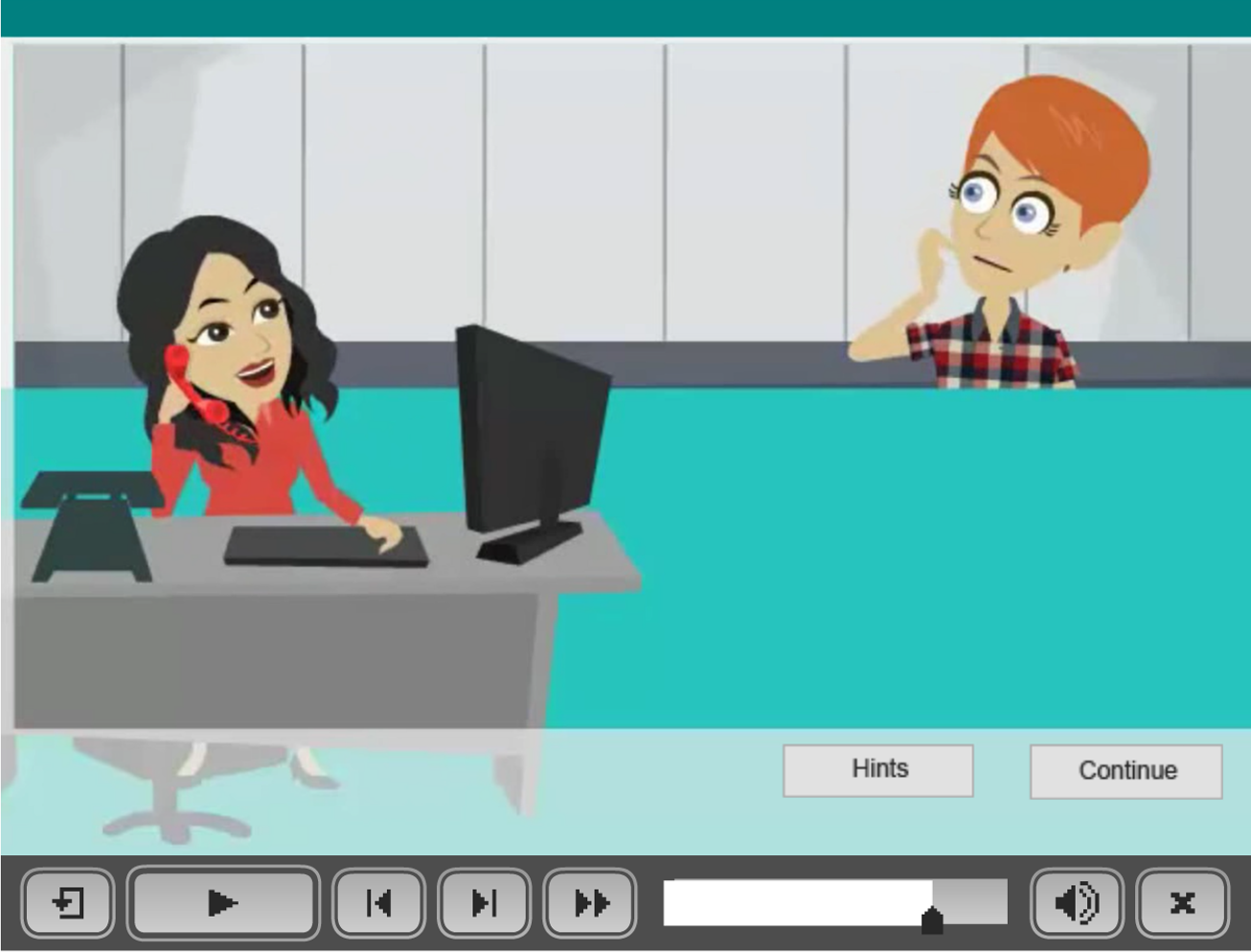
snapshot of a micro learning for Customer Service Call Flow Management, instead of just showing the knowledge structure, the whole micro learning is simular to a scenario of an agent talking to a customer.
How to add insight to the learning?
The micro learning should show learners what’s new about the topic they’re learning, or highlight something they may not have considered before.In this learning, instead of just highlight some softskills, we provide a thinking process to support their learning.
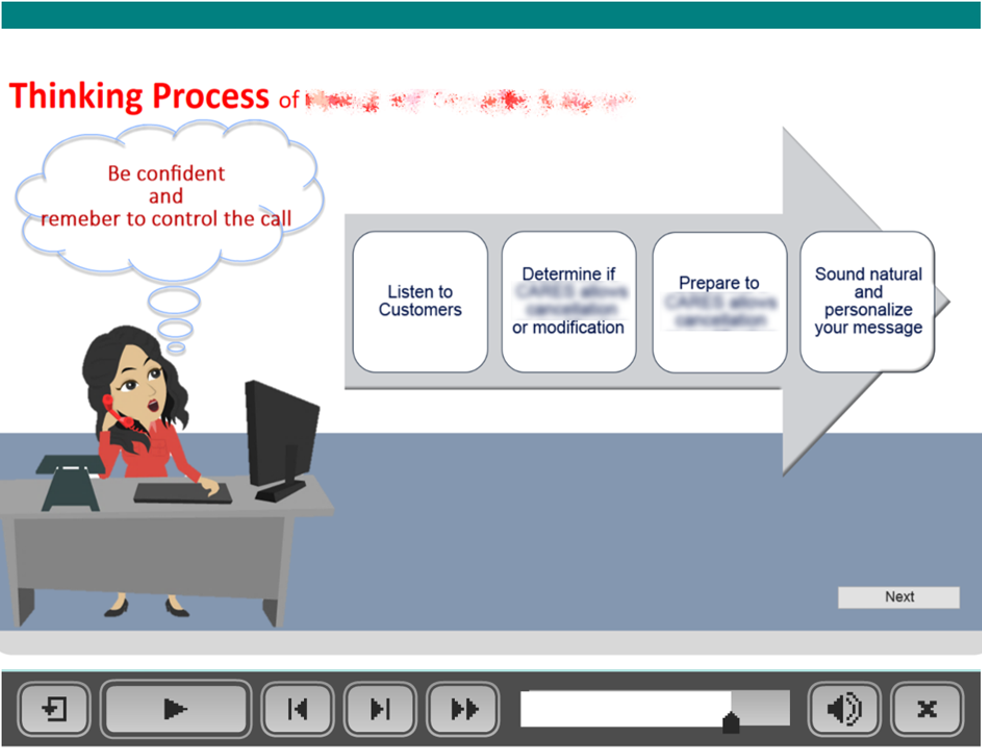
How to keep learners engage to the learning?
I focus on how to chuck knowledge into bite-size and enhance learning with rich media such as
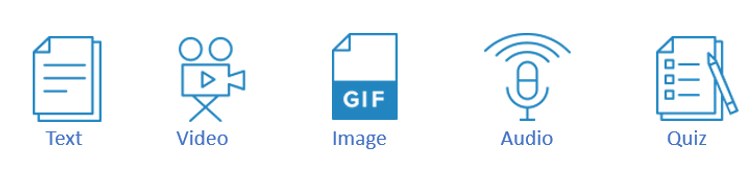
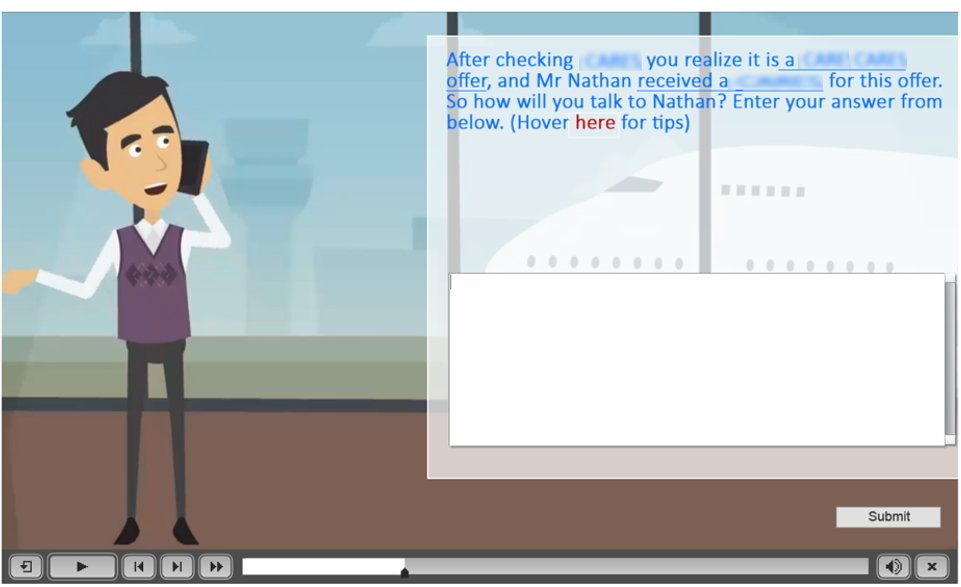
In this micro learning, I use animation and audio to simular the actually communication process;Besides, during the communication, learners are asked to provide their answer as a learning quiz; During the quiz, there is interactive hints provided to support the learner's learning, from knowlege the knowledge to apply the knowledge.
How to enable the transfer of skills or knowledge into daily work
I will transfer lessons in a few ways:
- list out steps or elements of a skill, to break down and simplify exactly what learners need to do.
- We provide examples to show what certain skills or behaviors look like in the real world.
- We ask learners assessment questions to help them analyze and practice what they’re learning, so they’ll improve their skills and retain the information.
A detailed micro learning demo will provide upon request
Copyright @ Siying DU 2018